Tuesday, September 14, 2010

UCL Tear

The ulnar collateral ligament in the elbow connects two bones in the arm, distal humerus and proximal ulna. It provides stability to the medial elbow, especially in overhead athletes. There are three portions to the UCL, anterior oblique, transverse, and posterior ligament. AOL (anterior oblique ligament) plays an important role in providing stability especially in the cocking phase of throwing or tennis serving. This means that it will be under a great deal of stress during such motion. 
       Mechanisms of injury involves valgus stress and traction force from the pronator-flexor mass complex. During baseball pitching, the ligament may be under stress that is close to the maximum torque that it can take. A repetitive stress to the ligament over a period of time may cause a partial or complete tear of the ligament. 
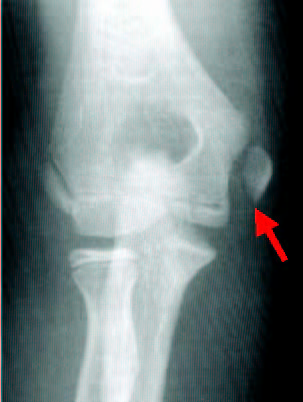
       In younger athletes, their growth plates are the weak link and more prone to an injury. Growth plate injuries instead of ligament injury are more common in those athletes. Medial epicondylar avulsion fractures can happen instead of UCL tear. The sublime tubercle, where UCL inserts on ulna, can also avulse. In addition to valgus stress to the medial part of the elbow, the lateral side of the joint is under compressive force. This force can also cause an injury to the lateral side such as OCD (osteochondritis dessecans). 

       Throwing mechanics plays an important role in reducing such stress to the joint. Certain mechanics are known to put more stress. Thus, it becomes important that overhead athletes are taught the right mechanics at the beginning because it is a lot harder to re-learn the right way after learning faulty motion than to learn the correct mechanics from the beginning.
       Treatment of these conditions include cessation of any overhead activities including throwing, physical therapy to strengthen rotator cuff muscles especially posterior cuff and forearm musculature if it is pain-free, ice, NSAID's to reduce inflammation in an acute phase, etc. Then, gradual interval throwing program should be initiated. If conservative treatment fails, surgical treatment will be necessary. 
MRI image of torn UCL
X-ray of medial epicondylar avulsion fracture

Monday, September 13, 2010

ACL In Preadolescents: Should It Be Reconstructed??

Even though it is still rare, ACL tear in preadolescent athletes are more talked about and diagnosed. A lot more ACL tears in adolescents occur than in preadolescents. However, it is a huge problem to athletes with torn ACL. Whether or not to reconstruct the torn ACL in still controversial.

ACL connects two bone in the knee, femur and tibila, thigh bone and shine bone. It provides stability to the knee and keeps the shine bone from sliding forward on femur and it also prevents excess rotational movements of the knee. Without ACL, athletes will not be likely to perform athletic maneuvers 100% even though there are some who do.

In the preadolescent, their growth plates (physes) are open and still growing. Some doctors are not willing to operate in those athletes. They usually wait until a growth spur occurs to reconstruct the torn ACL. Because there are some reports that growth arrest or other complications may happen if they put a hole through growth plates. There are also reports that say that it is ok to put a hole through growth plates unless a hardware is left in the middle of them. 

There are a few methods to reconstruct ACL without drilling a hope in growth plates. One is to put a graft between epiphyes. Each end of the graft will not reach the growth plate and stopped before. Another way is to take an IT band and use is as a graft. Many orthopedic surgeons will wait until growth spur is finished to reconstruct the torn ACL. One problem that may occur is that leaving a torn ACL in the knee will likely lead to degenerative damage in the knee, thus, leading to premature OA (osteoarthritis). Think about 20 some year old female suffering from OA?! That is not easy. 


In the end, there is no perfect answer to this question, I believe. There are pros and cons either way, early reconstruction or delayed reconstruction. They all should be discussed by the doctor and family member including the injured athlete herself/himself. 


Saturday, November 28, 2009

Figure Skating Injury: Medial Malleolar Bursitis

       Medial malleolar bursitis is one of the injuries unique to figure skaters, who wear rigid type boots when on ice. This condition happens from repetitive compression, friction, and shear forces created between the malleolus and boot. Common symptoms include pain right over the medial mellaolus which is a bony prominence right above the ankle, swelling, loss of motion, inability to keep a boot on, etc. This can be treated with (relative) rest, activity modification, NSAID's, ice, etc. If symtoms do not resolve with these treatments for a prolonged period of time, a surgical resection of inflamed bursa may be necessary.
       In case of septic bursitis, it should be removed surgically immediately and the athlete should be treated with antibiotics.
       This injury may be prevented by wearing properly fitted boots, not wearing worn out boots, using extra padding, avoiding overtraining, etc., and early intervention may keep it from progressing. Figur skaters spend hours and hours on ice for training and are prone to overuse injuries. Recognizing early signs and symptoms of any injury and treating them early become a key to prevent furthur injuries and to keep it from getting worse. 


MRI image of medial melleolus bursitis.

Sunday, October 11, 2009

ACL Tear Or Not (Differential Diagnosis)

ACL tears can sometimes be confused with other injuries, especailly when it happens to a younger athletes. Even though increased number of ACL injuries in younger athletes are seen, it is still rare compared to older population. Since, in those younger athletes, the weak link is their growth plate instead of the ligament itself, an injury to open growth plate (physis) becomes more common. The ligament can pull a piece of bone off of tibial plateau, which can happen by the same mechanisms of injury as an ACL tear. This can be detected by plain films. This injury is also different from ACL tears in that this can be repaired surgicaly not having to have it reconstructed.

Another injury that can be confused with ACL tears is petalla subluxation. This is due to similarities of both injuries. They both happen from similiar mechanisms of injury. Clinical presentations are similiar, such as immediate swelling, loss of motion, etc. Another reason for this is that medical professionals have to a tendency to think "knee injury = ligament injury?!" Those medical professionals need to do a thourough evaluation of the injury to avoid misdiagnosis.

A key to a quick recovery from an injury that has happended is to find out what the injury is and have it taken care of early and appropriately.


With patellar subluxation, the patella (knee cap) dislocates and it goes back in place by itself. So, there is no need for reduction. It may need to be immobilized, however. Most of the times, the patella dislocates/subluxes lateraly.

Thursday, October 8, 2009

When To Wait, When Not To.

Sometimes, unfortunately, injuries do happen. Injuries like ACL tears usually require surgery. However, it is not easy to make a decision and have a surgical procedure done, psychologically and timing-wise. Sometimes, it is wise to have it done right away. Sometimes, the athlete can wait. This decision making should be done considering the severity of the injury, recovery time, etc.

Rehab after ACL reconstruction takes about 5-6 months. This means, for some sports, the end of a season. Let's say the injured athlete is a professional baseball player and gets injured during spring training. This means that he will be more than likey miss the entire season. And his goal will become returning to the field the next season. If he gets surgery done by June, he will have enough time to get ready for the following season. However, he has about 3 months to make his mind up. In his case, he has an option to try to rehab his knee until then. If it works, he may be able to play. If not, he can go ahead and get a procedure done.

On the other hand, let's say the injured athlete is a 16 year-old soccer player who plays for a club team and for high school. In this case, her soccer season is pretty much all year around. It will probably better for her to have surgery done sooner because the longer she waits the longer her return to play will be.

Some cases are more complicated than these cases. But final decision should be made by the injured athlete (and parents if the athlete is a minor), not the surgeon or coach.

Tuesday, June 23, 2009

How To Prevent ACL Injury

Even though ACL injuries can be devastating, a risk of injury can be reduced. There are several strategies that can be used. Since mechanisms of an ACL injury are multi-factorial, the several factors should be considered when implementing a prevention program. Especially those at a higher risk of ACL injury can benefit from the program.

Here are some of the risk factors that can be eliminated or controlled.


Muscle Imbalance

There are two big muscle groups in the thigh, the quads and hamstrings. The quads are usually stronger than the hamstrings. However, if the hamstring strength drops below a certain % of the quad strength, the athlete may be at risk. An intact ACL prevents tibia (shin bone) from shifting forward on femur (thigh bone). When the quads and hamstrings co-contract with the knee straight or slightly bent, the quads pull tibia forward, which also puts stress on ACL, on the other hand, the hamstrings pull it back helping ACL keep tibia from shifting forward. If the hamstring are not strong enough to pull against the quads' counter force, it may put more stress on ACL than the balanced knee. By eliminating the hamstring strength deficit and having balanced muscle groups, a risk of ACL injury can be decreased.


Side-To-Side Difference

Muscle imbalance can also happen between the limbs. This happens when one leg is significantly stronger than the other. When the difference is more than 15%, it is considered significant. This does not necessarily mean that the athlete will get hurt but it means that he/she may be more at risk of injury. This is another risk factor that can eliminated doing some simple strengthening exercises.


Core Stability


Decreased core stability has been linked to lower leg injuries. Core training may not be as simple as strengthening leg muscles. However, it can be easily done without using much equipment and can be implemented as a part of regular training session (as warm-up or cool-down). An athlete may have strong arm and leg muscles, but if he/she does not have stable core, those muscle strength will go wasted. Even an athlete who can move and change directions quickly on the field will not be able to use his/her agility effectively and efficiently without stable core musculature. It will make it a lot harder for those who do not have core stability to defend themselves from an injury when they are off-balance and when they lose a control of their body. The athlete with good core stability will be able to regain their postural control even when it is lost.

Here are some examples of core exercises.


Proprioception


Proprioception is a position sensor located around the joints. If you raise your arm with your eyes closed, you can tell approximately where your arm is. This is because you have proprioceptors giving you information on where your arm is even without any visual feedback. This is the reason why you do not have to be looking at your feet all the time when you play soccer. Good proprioception not only helps athletes' performance but also keeps them from injuries.


Neuromuscular Training


This targets on teaching athletes how to do things the right way in neuromuscular level. Muscles only work when they get a signal from the nervous system. And they respond to it in the way that they are told to. If athletes are introduced to a new skill, the nervous system will send a signal telling the muscles to do what they are supposed to do. It may take some time and practice until they learn to perform the new skill. In the same way, this training focuses on how to use the muscles correctly to do athletic movement patterns the right way so that the athletes will have less risk of injury.

This video shows one exercise that can be used to teach athletes how their legs should be used on landing.


Thursday, June 18, 2009

ACL Injury: Who's At More Risk?

There are athletes that are more subject to an ACL injury than the others. Gender, sports they participate in, muscle balance/strength, biomechanics, etc. Some risk factors can be fixed/eliminated, but some may not. Injuries cannot always be avoided, however, it is a lot easier to prevent it than to rehabilitate after surgery.

Female

Female athletes are shown to be 4-6 time more at risk of ACL injuries than male counterparts. This may not sound fair but it is the fact that just being female increases the risk.

Sports

Certain sports have a higher injury rate than others. Those high risk sports include soccer, gymnastics, basketball, football, skiing, etc. ACL injuries can also happen in other sports such as tennis, baseball, and softball, but not as common as in sports listed above.

Previous Injury

Athletes who have had an ACL injury previously may be prone to re-injuring the same or the opposite knee. Some research articles deny it, on the other hand, there are research articles that have proven this is the fact.

Muscle Imbalance

Athletes who have side-to-side muscle imbalance may be more at risk. These athletes have one leg that is stronger than the other. Also, muscle imbalance can occur between two muscle groups (quadriceps and hamstrings). Usually, the quads are stronger than the hamstrings. But if hamstring strength drops below a certain percentage of quad strength, the athlete may be at a higher risk of injury.

Core Strength/Proprioception

Decreased core strength and proprioception have been linked to lower leg injuries. Core strength and proprioception play an important role in postural control and inability to control posture during athletic activities well will put the athletes at risk of injuries.

Biomechanics

There have been numerous research articles that studied biomechanical differences during landing and athletic activities. Athletes with biomechanical deficit are the ones whose knees bend inwardly during landing. This tends to happen more in female athletes. Female athletes also tend to keep their knees straighter compared to male athletes, which is also considered to be a risk factor. As a result, these athletes may not be able to absorb a GRF (ground reaction force) and their knee may be sustaining higher GRF.

Maturation

After growth spur, body weight and height increase drastically. As peak growth occurs, their muscle strength needs to increase in order to support increased body weight. Male athletes seem to successfully be able to get stronger as they grow, however, this adjustment does not seem to happen to females, leading to a gender difference in muscle strength after growth spur. This may be linked to a higher injury rate in female athletes after puberty.


There may be other risk factors. Athletes who participate in high risk sports should be participating in a prevention program as well as those who are considered to be at a higher risk of injury.